
Some of the links in this post are affiliate links. This means if you click on the link and purchase the item, I will receive an affiliate commission at no extra cost to you. All opinions remain my own.
It’s been a while since I have done one of these, but a lot has changed. Since passing the ARE, I have gone on to obtain my architecture license (in 2 states), work as a principal architect, discipline lead and project manager. Project management and organization is definitely an interest of mine, if you can’t tell by my detailed breakdown and structure of my ARE exam process.
With this in mind, and also to improve my skills in the leadership of architecture projects, I decided to obtain the Project Management Institute (PMI) Project Management Professional Certification. I was initially aiming for the CAPM, which is for associates, since that appeared to be easier and faster, but in reviewing the material, I thought I would be better served in both effort and time to go straight to the PMP. Using the methods here, I was able to obtain Above Target on all 3 exam areas, Process, People and Business Environment.
In true RMSM Studio fashion, even though it is not specifically architecture related, I decided to share my materials and process in case anyone else was interested in going down this path. One thing that I did early on in the process was becoming a member of the PMI, which provides a substantial exam discount.
Application Process
There are a number of paths towards the PMP, Set A, Set B, and Set C:
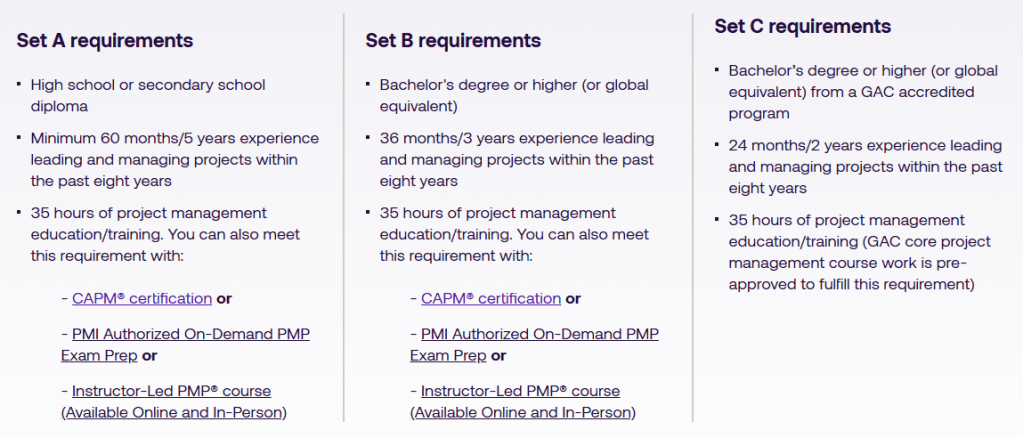
Most architecture professionals will fall under the Set B requirements, which is what I used. The creation of the project register for past experience was the most stressful part of this experience of this exam outside of the actual exam.
One of my big concerns was my project experience being audited, but the tips provided in Andrew Ramdayal’s course (more on that below) for this portion of the application were very helpful. I actually had more project experience than they required, but I decided to focus on presenting the most compelling and relevant projects to showcase the specific PM skills that I knew PMI was looking for.
It was interesting that after this course explained how the experience was proven and counted, I realized I could have sat for this exam several years earlier. There was nothing I could do at the time, but it leads me to recommend that you take this course as soon as possible, for this section alone, because you might be closer to being qualified than you think. You could shave off years waiting for the perfect portfolio of projects by understanding how experience is actually calculated.
Study Materials
PMP Certification Exam Prep Course 35 PDU Contact Hours/PDU – Udemy course by Andrew Ramdayal (TIA Education)
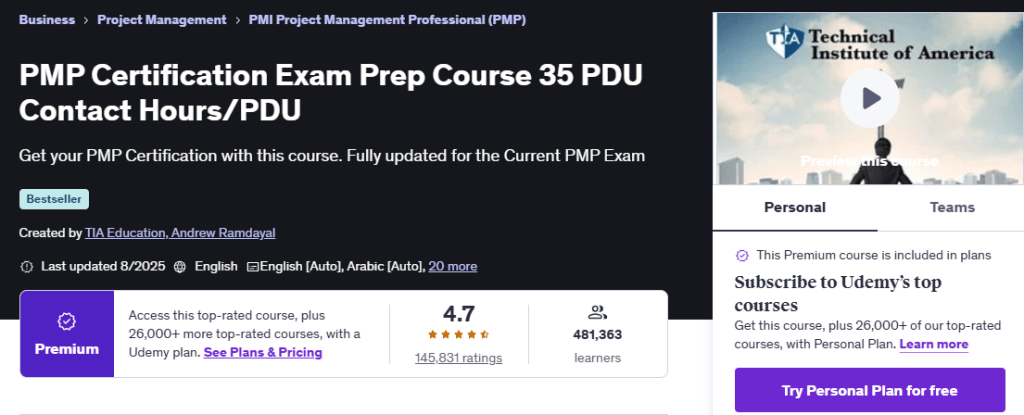
This is a premium course on Udemy, including the 35 hours of PDU as required by PMI above, but it is so much more than that. It teaches you the correct mindset to take with this exam, which is very similar to the ARE exam. Situations in this exam, even if you have experience and dealt with them in the real world, they still want you to apply the answers based on the ideal PMI mindset or process. This course discusses and hammers this home in a very helpful way.
Another great element of the course is that he provides a 30 day study plan, which I used as a guideline when I booked my exam with only a month to study. Trying to fit my social and personal life around studying was a real challenge. I tried to incorporate elements from my previous study time rules from the ARE exam, and it was helpful to already have that framework to reference.
I won’t refer to the price for this resource, as Udemy has different deals and promotions on a regular basis, but it is currently listed as $22.99.
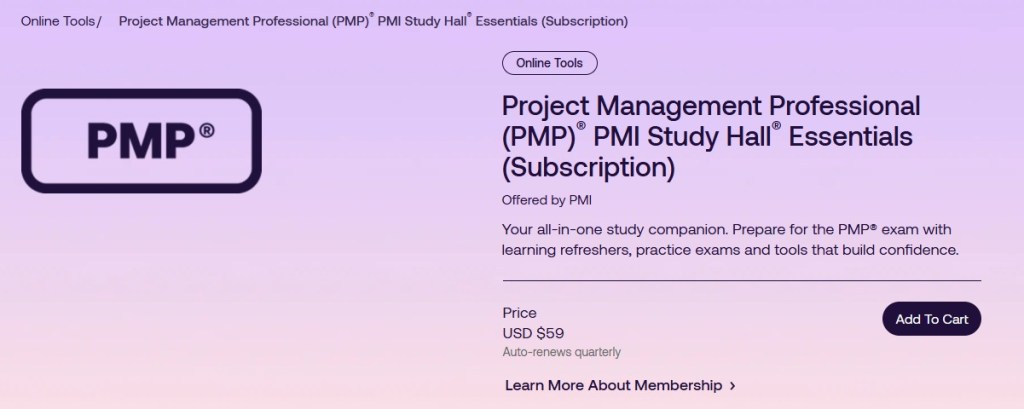
PMI Study Hall – Essentials only, focusing on the practice questions
I only took one PMI practice exam where I got 72%, and for the practice exams I scored around 70%
Rita Mulcahey PMP Text book, which I read through once. This book was recommended to me by MY project manager, as he said it was essentials to passing his exams.
Earned Value Management Video: Andrew Ramdayal created a video with tips on tips for memorizing the earned value management formulas. This is part of his course but I wanted to highlight this video specifically as being crucial to understanding the concept. He also has a version on Youtube, which I have linked to here.
Scrum Fieldbook: I felt weak in Agile practices so I got the Scrum Fieldbook, which had practical application of Scrum and Agile principles in the real world. I got my copy at the library for free, but it’s available for under $20 on Amazon.
Quizlet: I used 4 different Quizlet decks to assist with my studying. The goal with Quizlet is to keep drilling until you get everything right on a consistent basis. There is a great app, and this is a great way to study when you have a little pocket of time available during the day.
Overview
I tried to follow the Andrew Ramdayal study plan, but ended up taking a different path based on where I thought my gaps were. His course is very comprehensive, but I also realized that since I had been working in the industry a while, I needed to double down on what I was not familiar with. This is why I made a special effort with Scrum and memorizing some of the terminology and getting more deliberate and specific.
After the course’s Practice Exam I wrote down all the terms and concepts in the questions I got wrong and reviewed them. This is another technique I learned while studying for the ARE exam.
For the exam day itself, I had to drive almost 2 hours out to take the exam first thing in the morning. I was nervous that I would be thrown off by taking the exam in an unfamiliar place, but I would always rather take an exam in person. If anything goes wrong with my laptop, internet, or my general surroundings, I can instantly fail, through no fault of my own. I prefer to do it in a proctored environment and remove some variables. I brought my own snacks for the break and used the time to remain calm and stay grounded. I felt reasonably confident that I knew the material, but getting anxious would make my recall worse.
I ultimately ended up passing the exam with Above Target in all areas. I made sure to have a small celebration for myself to celebrate the win on a personal level. It has been a goal of mine to obtain my PMP since I was a kid (I know, weird dreams for a kid, but I really love managing), so it felt really satisfying to finally achieve it.
I wish you the best in your study journey, and all the success as you study for this exam.

